
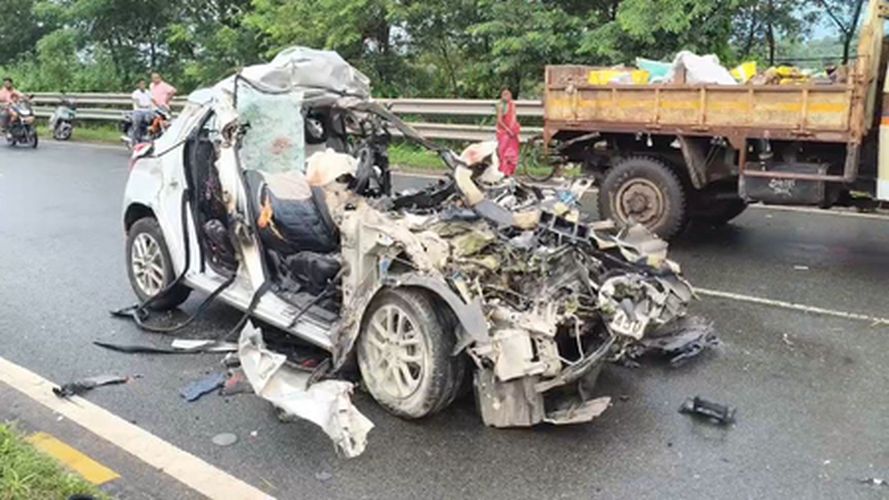
Ranchi/Jamshedpur- Four people, including Trisha Singh, daughter of Jharkhand Rural Development Minister Dipika Pandey Singh, were killed in a road accident in Jamshedpur on Thursday morning, police said.
The accident took place on the National Highway near Marine Drive at Domuhani. According to preliminary information, the car carrying Trisha Singh and the other occupants crashed into a truck that was parked along the roadside.
The group was reportedly travelling towards Jamshedpur when the collision occurred. The impact left four people dead.
Police reached the spot soon after receiving information about the accident and launched an investigation. Officials said they are examining the circumstances surrounding the crash and working to establish the exact cause of the collision.
The death of Trisha Singh has led to an outpouring of grief among political leaders, party workers and people across Jharkhand.
Chief Minister Hemant Soren expressed deep sorrow over the deaths and offered condolences to Dipika Pandey Singh and the families of the other victims.
“The extremely distressing and heart-wrenching news of the demise of fellow minister and sister Dipika Pandey Singh ji’s daughter and other individuals in the road accident on the NH highway in Jamshedpur has left my heart profoundly grieved,” Soren said.
“The pain of losing one’s child is beyond words and unbearable for any parent and family. In this extremely difficult time, my deepest condolences are with sister Dipika ji and the bereaved families. There are no words for this irreparable loss,” he added.
Soren also prayed for peace for the departed souls and strength for the bereaved families to cope with the loss.
Jharkhand Assembly Leader of Opposition Babulal Marandi also expressed grief over the incident in a social media post.
“I am deeply heartbroken by the tragic news of the untimely demise of the little girl injured in the road accident. May God grant strength to the grieving family to bear this unbearable pain. I extend my deepest condolences to the affected family,” Marandi said.
Police have begun the process of sending the bodies for post-mortem examinations. Investigators are continuing to gather details about the collision and the circumstances in which the stationary truck was positioned on the highway.
Further details are awaited.
IANS