
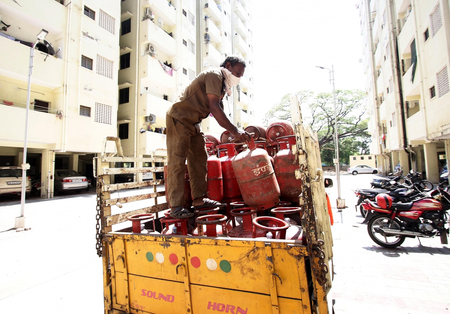
New Delhi- India’s liquefied petroleum gas (LPG) consumption has surged by more than 44 per cent, climbing from 21.6 million metric tons (MMT) in fiscal 2017 to 31.3 MMT in fiscal 2025, according to a new report. The demand is expected to reach 33–34 MMT in fiscal 2026, driven by widespread household access and a rise in refill intensity.
The report highlights that average household LPG refills under the Pradhan Mantri Ujjwala Yojana (PMUY) have increased to 4.5 cylinders per household per year in fiscal 2025, up from 3.9 cylinders in fiscal 2017. This growth reflects improved affordability, better distribution networks, and higher dependence on LPG for daily cooking needs.
Non-Ujjwala households have consistently maintained refill levels of 6–7 cylinders per household annually over the past five years.
Crisil Ratings noted that LPG usage for commercial and industrial purposes rose to 16 per cent of total demand in fiscal 2025, compared to 10 per cent in fiscal 2017. Higher adoption in food service businesses, institutional kitchens, and small manufacturing units has expanded the demand base and reduced traditional seasonal fluctuations in household consumption.
Domestic LPG production has increased modestly from 11.2 MMT in fiscal 2017 to 12.8 MMT in fiscal 2025. However, this growth has not kept pace with rising national demand, leading to a declining share of domestic supply in overall LPG availability.
The report also pointed out that India continues to rely heavily on imports, with 55–60 per cent of its LPG demand met by foreign suppliers over the past decade, despite gradual increases in domestic output.
A recent India–US LPG agreement, involving 2.2 million tonnes per year of long-term supply, marks a strategic step toward diversifying sources and reducing reliance on Middle Eastern producers. However, the report cautioned that import economics may be influenced by freight-related cost sensitivities in the near term.
With inputs from IANS