
Srinagar- The Central government and representatives of the Ladakh Apex Body (LAB) and Kargil Democratic Alliance (KDA) have reportedly arrived at an in-principle understanding aimed at granting greater political and administrative powers to Ladakh.
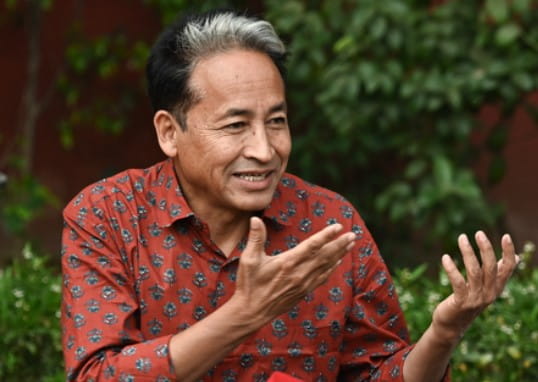
The proposed framework includes an elected chief minister, a Union Territory-level legislative body with legislative, executive and financial powers, and Constitutional safeguards similar to provisions under Article 371. Renowned climate activist Sonam Wangchuk also participated in the discussions.
According to highly placed sources, the understanding was reached during a meeting of the Sub-Committee under the Union Ministry of Home Affairs (MHA) held in New Delhi on Friday. Senior officials from the MHA, the Ladakh administration, and leaders from LAB and KDA attended the deliberations.
A joint statement issued by Chering Dorjay and Asgar Ali Karbalai, co-chairpersons of LAB and KDA respectively, said both sides reached broad agreement on several key issues after detailed discussions.
Under the proposed arrangement, all legislative, executive and financial authority would rest with elected representatives through a UT-level legislative body. Bureaucrats in the Union Territory, including the Chief Secretary, would function under the executive head of the elected body, proposed to hold a status equivalent to a chief minister.
Tashi Gyalson, BJP leader and former Chairman-cum-Chief Executive Councillor of the Leh Autonomous Hill Development Council, said the proposal also includes the creation of seven district councils in Ladakh. The Centre had recently increased the number of districts in the Union Territory from two to seven.
He added that the exact structure, nomenclature, and election process for the proposed UT-level legislative body would be finalised after further consultations among stakeholders.
Former Ladakh MP Thupstan Chhewang said all seven districts would have Zila Parishads with suitable autonomy, especially in matters concerning land and culture.
The joint statement further said the MHA clarified that full statehood for Ladakh is currently not feasible because the region does not yet generate enough revenue to meet expenditure obligations such as employee salaries. However, the proposed model could eventually pave the way for statehood once financial conditions improve.
LAB and KDA said they had reached an understanding with the Centre on restoring democratic governance in Ladakh and providing Constitutional safeguards similar to Article 371A, 371F and 371G, which apply to Nagaland, Sikkim and Mizoram respectively.
Sources said the MHA will now prepare a draft proposal for the UT-level legislative framework in consultation with LAB and KDA representatives. Although no timeline has been fixed for implementation, officials reportedly assured stakeholders that the process would move forward as early as possible.
Calling the development historic, Thupstan Chhewang said the proposed arrangement combining Article 371 protections, Sixth Schedule-like safeguards, financial empowerment, and an elected legislature marked a major step towards securing Ladakh’s political future.
The LAB and KDA have been campaigning for over five years seeking statehood and Sixth Schedule protections for Ladakh. Several rounds of talks have already taken place under a High-Powered Committee headed by Union Minister of State for Home Nityanand Rai, addressing issues related to domicile, reservation and governance.
With inputs from IANS