
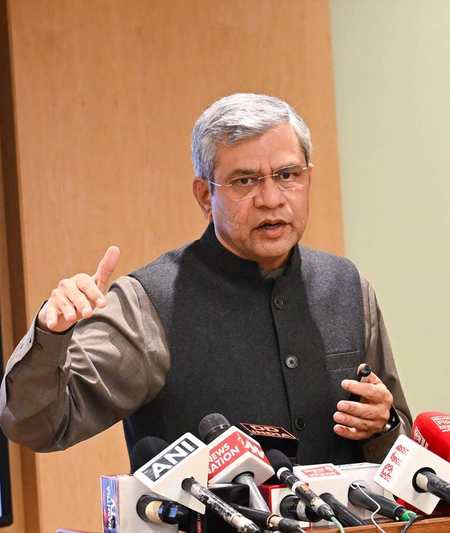
New Delhi: Union Minister Ashwini Vaishnaw on Saturday announced two new reforms approved by Indian Railways as part of its initiative to implement “52 reforms in 52 weeks” during 2026.
He emphasised that reforms within the railway system are a continuous process aimed at enhancing efficiency and service quality. The minister noted that consistent improvements have already helped Indian Railways become the world’s second-largest cargo transporter while adopting modern trains and advanced operational practices across its network.
Explaining the first reform, Vaishnaw said that from 2026, Indian Railways will implement comprehensive end-to-end cleaning of trains, particularly long-distance services. Previously, intensive cleaning was largely limited to reserved coaches, but the new system will extend full cleaning services to general coaches as well, marking a significant operational shift.
He added that the existing “Clean Train Station” model, where detailed cleaning was conducted only at selected stations, will be replaced with a continuous cleaning system operating throughout the train’s journey, from its origin to its final destination.
Under the new system, maintenance teams will handle toilet sanitation, garbage disposal, coach interior cleaning, water supply issues, and minor electrical or mechanical repairs such as faulty lights during the journey itself, ensuring improved comfort and hygiene for passengers.
The minister stated that the reform aims to transform the overall travel environment. After consultations with various zonal railway divisions, four to five high-footfall long-distance trains from each zone have been selected for implementation over the next six months.
In the first phase, 80 trains across multiple railway zones have already been identified. The programme will gradually expand over the next three years to cover all trains, based on operational requirements and feedback from railway authorities.
Vaishnaw further said that specialised, technology-driven service teams will be deployed under structured Service Level Agreements specifying cleaning frequency. Cleaning activities will be intensified during peak travel hours and reduced during non-peak periods, ensuring continuous toilet sanitation, waste management, interior cleaning, and linen services.
He also announced that linen distribution, collection, and cleaning — previously handled by separate agencies — will now be managed by a single service provider to improve efficiency and accountability.
With inputs from IANS