
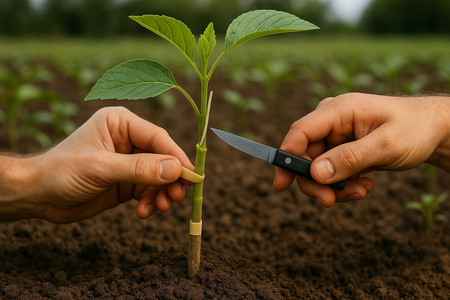
Ranchi: Garhwa village near the Jharkhand-UP border has become a beacon of agricultural innovation thanks to Hridaynath Chaubey, a retired school headmaster who has popularised graft farming of vegetables like tomatoes and brinjals.
After retiring from teaching, Chaubey sought better ways to increase farmer incomes and adopted graft farming. He began by buying grafted seedlings from Ambikapur, Chhattisgarh. These plants, he says, produce nearly double the harvest of normal ones and resist diseases better—key factors in profitability.
One of the major advantages of these grafted crops is their ability to grow year-round, including in off-seasons, when market rates are higher.
“Whereas rice or wheat cultivation may only bring Rs 30,000 per acre, vegetables like tomatoes and brinjals grown with modern techniques can generate up to Rs 3 lakh per acre,” Chaubey said, recounting his success on one and a half acres of land.
District Agriculture Officer Shiv Shankar Prasad added that this method—grafting brinjals and tomatoes onto wild brinjal rootstock—is widely successful in Chhattisgarh and increasingly in Jharkhand.
This farming technique, which improves yield, weather resistance, and plant health, is now being seen as a sustainable model for rural prosperity.
With inputs from IANS