
New Delhi: India’s consumer price inflation, measured by the Consumer Price Index (CPI), stood at 1.33 per cent in December 2025, marginally higher than the 0.71 per cent recorded in November, official data showed.
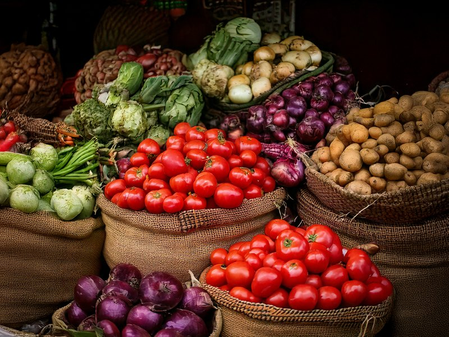
Food inflation continued to remain in the negative zone at (-) 2.71 per cent in December, reflecting a year-on-year decline in food prices. This marked the seventh consecutive month of negative food inflation, providing sustained relief to household budgets. However, the December figure was slightly higher than the (-) 3.91 per cent reported in November.
According to an official statement, the uptick in headline inflation and food inflation during December was mainly driven by higher inflation in categories such as personal care and effects, vegetables, meat and fish, eggs, spices, and pulses.
Despite the increase, the overall inflation outlook remains benign. The Reserve Bank of India’s Monetary Policy Committee (MPC) last month revised its inflation forecast for FY 2025-26 downward to 2 per cent from the earlier estimate of 2.6 per cent made in October, citing a sharp decline in food prices and the impact of GST rate cuts.
RBI Governor Sanjay Malhotra also announced a 25 basis point cut in the repo rate to 5.25 per cent from 5.5 per cent, stating that the easing inflation environment allows monetary policy to focus more on supporting economic growth.
Malhotra noted that the surge in economic growth to 8.2 per cent in the second quarter of the current financial year, combined with a sharp drop in inflation to 1.7 per cent, has created a rare “Goldilocks period” for the Indian economy.
“The MPC observed that headline inflation has eased significantly and is likely to remain lower than earlier projections, primarily due to exceptionally benign food prices. In view of these favourable conditions, projections for average headline inflation in 2025-26 and Q1 of 2026-27 have been revised further downward,” he said.
The RBI Governor added that core inflation—excluding food and fuel—remained largely contained during September and October, despite price pressures from precious metals. Excluding gold, core inflation moderated to 2.6 per cent in October, indicating that the decline in inflation has become more broad-based.
Malhotra also highlighted that food supply conditions have improved due to higher kharif output, healthy rabi sowing, adequate reservoir levels, and favourable soil moisture. Looking ahead, international commodity prices, barring some metals, are expected to moderate.
With inputs from IANS