
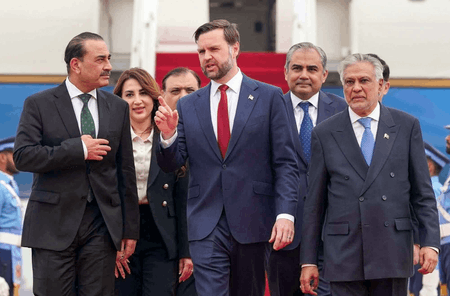
Islamabad — A new report has raised concerns that any future agreement between the United States and Iran could face long-term challenges if Pakistan is used as a key intermediary.
The analysis, published in Eurasia Review by Najib Azad, argues that deep-rooted geopolitical contradictions—especially involving Pakistan’s role—could weaken the effectiveness and durability of any deal.
Azad describes the idea of Pakistan hosting or mediating US-Iran talks as strategically troubling, suggesting it reflects a long-standing pattern in US foreign policy of assigning Pakistan a larger role than its historical record supports.
He points to Pakistan’s doctrine of “strategic depth,” which, while framed as a security approach, has often translated into influence through non-state actors and regional leverage. According to the report, this has contributed to instability rather than sustained peace.
The report traces these concerns back to the Cold War, when Pakistan acted as a key conduit for US support to Afghan fighters during Operation Cyclone. The networks and systems created during that period continued to influence conflicts even after the Cold War ended.
After 9/11, Pakistan became a frontline ally of the United States in the fight against terrorism. However, questions persisted about selective counterterrorism actions and the presence of militant safe havens. The discovery of Osama bin Laden in Abbottabad, close to a military facility, intensified global scrutiny.
Azad argues that Pakistan’s strategic importance has often increased during periods of regional tension, which can raise doubts about its ability to act as a neutral mediator. Effective mediation, he notes, requires credibility, neutrality, and a clear commitment to long-term stability—factors that critics say are complicated by Pakistan’s past policies.
The report also highlights that concerns over links to militant groups have been acknowledged not only by international observers but also by some former Pakistani leaders, shaping perceptions of the country’s role in regional security.
While involving Pakistan may offer short-term advantages—such as facilitating communication and logistics—the report concludes that it could introduce long-term strategic risks, potentially undermining the success of any peace process.
WIth inputs from IANS