
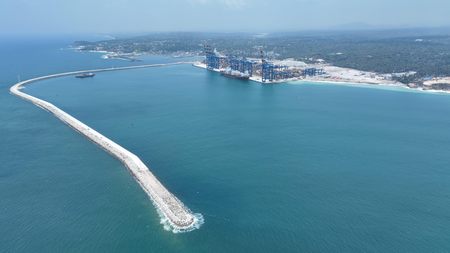
New Delhi – India’s aspiration to emerge as a major maritime power is steadily translating from vision into reality along its 7,500-kilometre coastline. Ports that once served as modest trading points are now evolving into high-activity economic hubs, handling rising cargo volumes and supporting the country’s manufacturing expansion, export growth, and global competitiveness, according to an India Narrative report.
However, as port-led activity accelerates, a crucial challenge has gained prominence: how to sustain this growth without damaging fragile coastal ecosystems or intensifying climate risks.
India’s policy response has become increasingly clear. Green growth is no longer viewed as a constraint on development, but as an essential condition for ensuring long-term economic sustainability.
Ports account for nearly 95 per cent of India’s external trade by volume, underlining their strategic importance to the national economy. Over the past decade, cargo handled at major ports has increased significantly—from around 581 million tonnes to nearly 855 million tonnes—reflecting stronger domestic manufacturing and deeper integration with global supply chains.
Yet ports are also significant contributors to air pollution, water contamination, and carbon emissions. Many are located near ecologically sensitive zones such as mangroves, wetlands, and coral reefs, as well as densely populated coastal cities, heightening environmental and social concerns.
A decisive shift in governance is already underway. The replacement of the colonial-era Ports Act of 1908 with the Indian Ports Act, 2025 marks a landmark moment in maritime regulation. Environmental safeguards are now embedded directly into the legal framework, making sustainability a mandatory pillar of port development rather than a voluntary initiative.
This legislative reform is reinforced by long-term strategic planning that aligns infrastructure expansion with climate responsibility. At the centre of this approach is the Maritime India Vision 2030, which places sustainability at the core of port-led growth. It is supported by the Harit Sagar Green Port Guidelines, which establish clear, measurable targets.
Under these guidelines, ports are expected to reduce carbon emissions per tonne of cargo by 30 per cent by 2030, electrify a substantial portion of their equipment, and source over 60 per cent of their energy from renewable resources. These benchmarks are designed to scale further toward 2047, signalling that the green transition is a continuous and evolving process.
Operational practices at ports are also undergoing transformation. Shore-to-ship power systems enable vessels to switch off diesel engines while berthed, significantly reducing air pollution in surrounding urban areas. The adoption of electrified cranes, vehicles, and cargo-handling equipment is lowering noise levels, cutting fuel costs, and improving workplace safety.
These measures are delivering tangible benefits to local communities that have long borne the environmental costs of port operations.
Water stewardship and biodiversity conservation are also emerging as key priorities. Ports consume substantial quantities of freshwater and generate wastewater and dredged material. New approaches emphasise wastewater recycling, reduced discharge, and the reuse of dredged material for construction and coastal protection.
In parallel, initiatives to restore mangroves and expand green cover are helping absorb carbon emissions while strengthening natural defences against storms and coastal erosion—threats that are intensifying with climate change.
Together, these efforts underscore India’s strategic bet on green ports as the foundation for its next phase of maritime and economic growth.
With inputs from IANS