
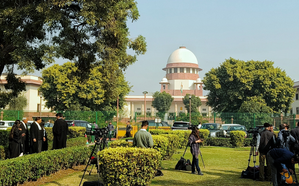
New Delhi — The Supreme Court of India has upheld a ruling of the Andhra Pradesh High Court, stating that a person who converts to Christianity and continues to practice the faith cannot claim Scheduled Caste (SC) status.
A Bench comprising Justices Prashant Kumar Mishra and N. V. Anjaria ruled that only those professing Hinduism, Sikhism, or Buddhism are eligible to be recognised as members of Scheduled Castes under the law. The court clarified that conversion to any other religion leads to an “immediate and complete loss” of SC status.
The Bench emphasised that the restriction under the Constitution (Scheduled Castes) Order, 1950 is absolute and does not allow for exceptions. It further noted that an individual cannot simultaneously follow another religion and claim the benefits associated with Scheduled Caste classification.
In the case at hand, the court observed that the petitioner had been practicing Christianity and serving as a pastor for over a decade, regularly conducting Sunday prayers. This, the court said, clearly established his religious identity, leaving no ambiguity about his continued adherence to Christianity.
The judgment also pointed out that the petitioner had neither reconverted to his original religion nor been accepted back into his caste community. As a result, he could not claim protections under laws meant for Scheduled Castes.
Earlier, in its April 30, 2025 ruling, the Andhra Pradesh High Court had similarly held that a person who had converted to Christianity could not invoke provisions of the Scheduled Castes and Scheduled Tribes (Prevention of Atrocities) Act. The High Court had reasoned that since the caste system is not recognised within Christianity, such claims are not legally valid.
The Supreme Court’s decision reinforces the constitutional framework governing Scheduled Caste status and is expected to have significant implications for similar cases in the future.
With inputs from IANS