
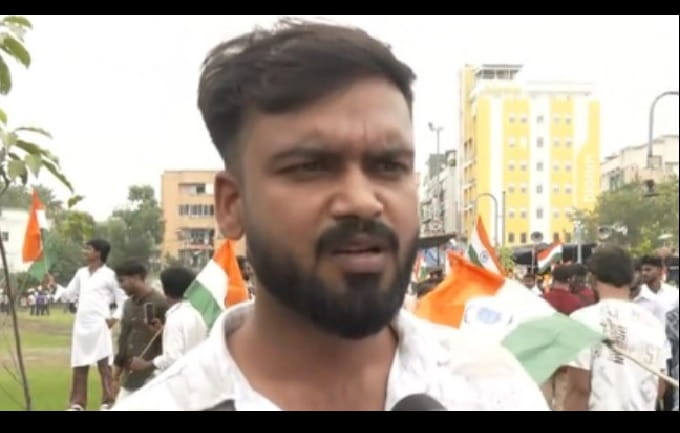
Ranchi — Students leading an ongoing agitation in Jharkhand on Saturday welcomed Prime Minister Narendra Modi’s Independence Day message on empowering the youth, while calling for stringent action against those involved in examination paper leaks and other recruitment irregularities.
Addressing the nation from the Red Fort on the 80th Independence Day, Modi highlighted the importance of ‘Yuva Shakti’, saying India must fully utilise the potential of its young population and channel their abilities towards nation-building. He also underlined the role of young Indians in achieving the vision of Viksit Bharat by 2047.
Student leader Ravishankar said the concerns of young people should remain a priority for both the Central and state governments.
“Apart from NEET, irregularities have taken place in many other Central examinations as well. Similar irregularities have taken place in Jharkhand,” he told IANS.
He said the country could not achieve the goal of self-reliance unless young people were given a fair opportunity to build their careers.
“Today’s youth are the future of the country. Until they become self-reliant, India cannot become Aatmanirbhar and move ahead,” Ravishankar said, urging both governments to ensure the strictest punishment for those found responsible for leaking examination papers.
Another protester, Nitesh Sinha, said the students supported the Prime Minister’s emphasis on youth but argued that stronger safeguards were necessary to protect competitive examinations.
“We support whatever PM Modi said regarding the youth but the government should take stringent measures to stop paper leaks as only then capable youth can contribute in nation building,” he said.
The student movement in Jharkhand has been centred on alleged irregularities and paper leaks in recruitment examinations conducted by the Jharkhand Public Service Commission (JPSC) and Jharkhand Staff Selection Commission (JSSC). The protesters are demanding an investigation into the allegations and action against those found responsible.
Meanwhile, another protester, Ramavtar Mahto, raised a separate concern over the recently passed Mines and Minerals (Development and Regulation) Amendment Bill, 2026.
While welcoming the Prime Minister’s comments on youth empowerment, Mahto argued that changes affecting the powers of states over mineral-related taxation could have wider implications for Jharkhand, a mineral-rich state.
He alleged that reducing the state’s financial powers could leave states more dependent on the Centre for their legitimate revenues. Jharkhand Chief Minister Hemant Soren has also strongly opposed the amendment.
“I request the Central government to roll back this law,” Mahto told IANS.
The government, however, has maintained that the amendment does not take away the states’ rights over land and minerals or their existing share of mining-related revenue. According to the Centre, around 90 per cent of taxes and statutory payments from mining currently accrue to the states, and this arrangement will continue under the amended framework.
The contrasting views reflect the wider concerns being raised by the protesters, who are linking youth employment, transparent recruitment and the economic rights of the state to the broader question of how Jharkhand’s young population can participate meaningfully in nation-building.
With inputs from IANS