
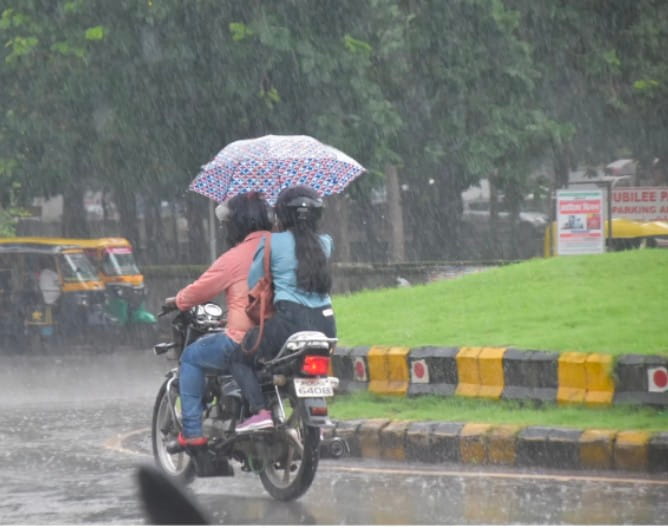
Jamshedpur: Although the Southwest Monsoon has finally entered Jharkhand, the state continues to grapple with a severe rainfall deficit, raising concerns over the upcoming agricultural season.
According to the India Meteorological Department (IMD), Jharkhand recorded a 60 per cent rainfall deficit between June 1 and June 22. During this period, the state received only 44.7 mm of rainfall against the normal 112.1 mm, leaving farmers worried as sowing activities remain delayed in many areas.
The rainfall shortage is widespread, with several districts recording deficits of more than 80 per cent.
Garhwa is the worst-affected district, receiving just 1 mm of rainfall—an alarming 99 per cent deficit. Other severely affected districts include Sahibganj (98% deficit), Chatra (92%), Seraikela-Kharsawan (84%), Lohardaga (82%), Palamu (82%) and Gumla (81%).
In the Kolhan region, both East Singhbhum and West Singhbhum have recorded a 69 per cent rainfall deficit, while Seraikela-Kharsawan remains among the hardest-hit districts.
Ranchi is the only district to receive near-normal rainfall so far, recording 118.2 mm against the seasonal average of 115.6 mm.
“Clouds have been appearing almost every day, but there has been very little meaningful rainfall. Farmers are anxiously waiting to begin sowing,” said Mahendra Mahto, a resident of East Singhbhum, echoing the concerns of cultivators across the state.
Despite the current shortfall, weather conditions are expected to improve. The IMD has forecast further advancement of the Southwest Monsoon across Jharkhand over the next 48 hours, which is likely to increase rainfall activity in many districts.
Temperatures remained relatively pleasant on Monday. Daltonganj was the hottest place in the state with a maximum temperature of 37.1°C, while Latehar recorded the lowest minimum temperature at 21.8°C. Ranchi remained cool at 28.4°C, helped by light showers, while Jamshedpur recorded a maximum temperature of 31.8°C.
With the kharif sowing season underway, the coming days will be crucial for Jharkhand’s farmers. Timely and widespread rainfall will be essential to replenish water bodies, support agricultural activities and reduce the state’s widening rainfall deficit.