

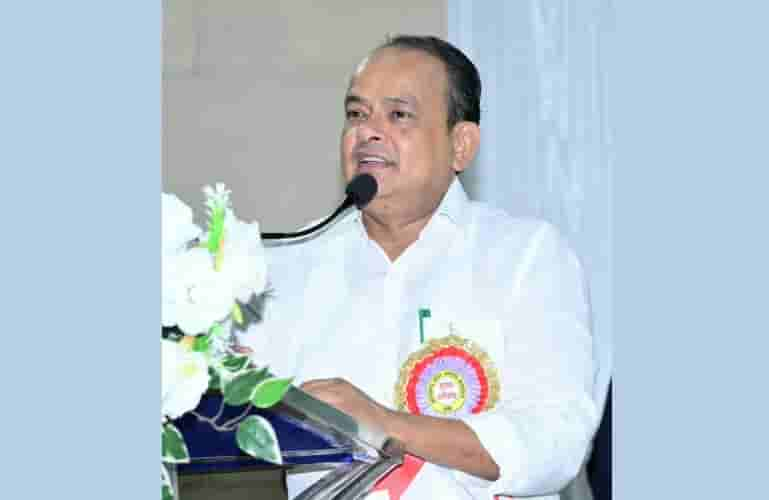
Ranchi: Jharkhand Health Minister Dr Irfan Ansari has announced a series of initiatives aimed at reducing the financial burden on cancer patients and strengthening cancer screening and treatment facilities across the state.
Emphasising that financial difficulties should never prevent patients from accessing life-saving treatment, the minister said cancer treatment often pushes economically weaker families into severe financial distress. Many are forced to exhaust their savings or even sell land and other assets to afford expensive medicines.
“As a doctor, I understand the suffering of patients and the financial difficulties their families face. My effort is to ensure that no patient is deprived of treatment because of a lack of money,” Ansari said.
Major relief through reduction in prices of 137 cancer medicines
The minister welcomed a decision by the National Pharmaceutical Pricing Authority (NPPA), under the Department of Pharmaceuticals, Government of India, to cap trade margins at 30 per cent on 137 non-scheduled cancer medicines.
The decision was taken on October 17, 2026, and came into effect on November 9, 2026. Under the revised pricing mechanism, the maximum retail prices (MRPs) of several cancer medicines have been substantially reduced. According to the information shared by the Health Department, price reductions of 50 to 75 per cent are possible for several medicines, with some witnessing even steeper cuts.
Two medicines highlighted for their significant price reductions are:
- PALBACE PRO (Palbociclib): The price cited earlier was around Rs 41,000, while the revised price has been reported at approximately Rs 2,700. The medicine is used in the treatment of certain types of breast cancer.
- ABIROW (Abiraterone): Its earlier price was reported at around Rs 45,000, compared to approximately Rs 4,000 under the revised pricing. It is used in the treatment of prostate cancer.
The actual retail price will depend on the medicine’s strength, pack size and revised MRP.
Ansari has initiated steps to prepare a Standard Operating Procedure (SOP) for implementing the revised pricing system in Jharkhand. Directions are also being planned for concerned officials, hospitals, pharmaceutical companies and medicine retailers to ensure that patients receive the benefits of the price reductions and are not charged above the prescribed MRP.
Minister had earlier raised issue of expensive cancer medicines with Centre
The Health Minister said he had previously taken up the issue of expensive cancer medicines with the Central Government, including during a video conference with the Union Health Minister.
He had highlighted the economic difficulties faced by poor patients in Jharkhand, pointing out that the high cost of cancer medicines often puts essential treatment beyond their reach.
According to Ansari, controlling medicine prices is particularly important for states like Jharkhand, where a large section of the population belongs to economically weaker and middle-income families.
He said the Centre’s latest decision was an important step towards making cancer treatment more affordable. The state government’s priority would now be to ensure effective implementation so that patients receive medicines at the revised prices.
CT Scan and PET Scan facilities proposed at all district hospitals
Alongside efforts to make medicines affordable, the Health Department is also working towards strengthening diagnostic infrastructure across Jharkhand.
Ansari said plans were being pursued to ensure the availability of modern CT Scan and PET Scan facilities at district-level Sadar hospitals. The initiative is also expected to strengthen cancer screening services and facilitate early detection.
“Our objective is to ensure that poor patients do not have to travel to Ranchi or other major cities repeatedly for cancer investigations. Modern diagnostic facilities should be available at the district level itself. Early detection and immediate treatment are our priorities,” he said.
The minister emphasised that identifying cancer at an early stage would improve access to timely specialist care and help patients begin treatment without unnecessary delays.
Focus on early detection and cancer awareness
The Health Department is also working to strengthen screening programmes, particularly for breast and cervical cancers among women, while improving arrangements for the early identification of other forms of cancer.
The proposed approach involves identifying suspected cases at the district level and linking patients with specialised hospitals for further investigations and treatment.
Strengthening referral mechanisms and ensuring timely follow-up after screening will also be important to making early detection programmes effective.
Commitment to affordable healthcare under CM Hemant Soren’s guidance
Ansari said Chief Minister Hemant Soren had consistently emphasised the need to provide accessible, affordable and quality healthcare to every resident of Jharkhand.
“I am a doctor myself and understand the pain of patients as well as the financial hardships faced by their families. My endeavour is to ensure that nobody in Jharkhand is denied treatment due to a lack of money. Our objective is not merely to make announcements but to implement initiatives on the ground so that patients actually benefit,” he said.
The minister added that the state government’s efforts ranged from making cancer medicines more affordable to expanding modern diagnostic facilities at the district level.
He said the broader objective was to strengthen Jharkhand’s healthcare infrastructure and improve access to quality medical treatment across the state.