
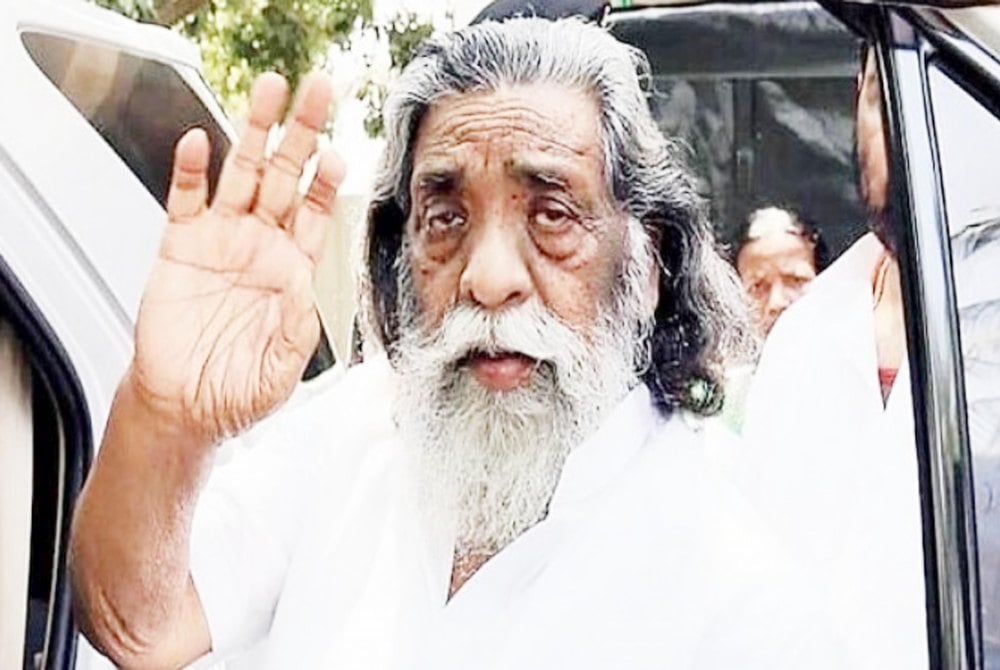
Ranchi: Shibu Soren, a prominent Indian tribal leader and founder of the Jharkhand Mukti Morcha (JMM), passed away on August 4, 2025, at the age of 81.
He was a three-time Chief Minister of Jharkhand and played a key role in the movement for the creation of Jharkhand state, which was formed in 2000.
Soren had a political career spanning over four decades and was also a Union Minister for coal. He had been undergoing treatment in Delhi for kidney-related ailments and was on life support after suffering a stroke about a month before his death.
His son, Hemant Soren, the current Chief Minister of Jharkhand, announced his passing and expressed deep sorrow, calling him “Dishom Guru,” meaning great leader among the Santhal tribe. Prime Minister Narendra Modi also condoled his death, calling him a grassroots leader dedicated to empowering tribal communities and the poor.
Born on January 11, 1944, in Nemra village, then a part of Bihar (now in Ramgarh district of Jharkhand) ,and named as Shivcharan (as he was known in his early life) Shibu Soren’s activism began early, driven by a deep commitment to fight against the exploitation of tribal communities.
Soren’s death marks the end of an era in the national life of Adivasis. He instilled in them a sense of political struggle. Soren was destiny’s child. The gruesome murder of his father, Sobaran Manjhi, who was a teacher in a school in Gola beside Nemra, his ancestral village, changed his life. Sobaran stood against the exploitation by moneylenders and was eventually killed when Shivcharan, as Shibu was known in his early life, was still very young.
This incident turned Shivcharan into an adult overnight. From Shivcharan, he became Shibu, later Guruji and then Disom Guru — all through a life dedicated to eradicating moneylending, exploitation and oppression of Adivasis in the region.
Shibu Soren’s legacy in Indian politics is that of a passionate and iconic tribal leader who championed the rights of India’s marginalized tribal communities, particularly in Jharkhand. He played a pivotal role in the decades-long struggle for the creation of Jharkhand state, which was carved out of Bihar in 2000. As founder of the Jharkhand Mukti Morcha (JMM), he led advocacy for tribal land rights, forest protections, and social inclusion, becoming a symbol of tribal empowerment known affectionately as “Dishom Guruji.”
Soren served multiple terms as Jharkhand Chief Minister and was elected repeatedly to the Lok Sabha and Rajya Sabha, showcasing his enduring popularity. He also held the Union Minister for Coal portfolio three times. Despite controversies and legal challenges, his commitment to tribal aspirations and social justice remained central to his political life. His leadership helped lay the foundation for modern Jharkhand politics and inspired successive generations including his son Hemant Soren, the current Chief Minister. National leaders acknowledge his profound contributions to tribal empowerment and social justice in India
Shibu Soren’s influence on tribal politics in India, especially in Jharkhand, was profound and enduring. He is credited with transforming grassroots tribal mobilization into an organized, effective political force. After personal tragedy struck with his father’s murder by moneylenders, Soren began a movement against exploitative moneylenders and the seizure of tribal lands, which quickly gained traction among local communities. His activism evolved into a broad campaign for tribal rights, land ownership, and protection from exploitation, leading to the founding of the Jharkhand Mukti Morcha (JMM) in 1972-73.
Through JMM, he became the primary political voice for tribal aspirations, uniting diverse tribal communities across Jharkhand under a common demand for a separate state.
Soren’s “Dhan-Kati” movement, protests against feudal exploitation, and his impromptu people’s courts against landlords made him a cult figure and earned him the title “Dishom Guru” (leader of the land) within the Santhal community. His relentless agitation and negotiation ultimately culminated in the creation of the state of Jharkhand in 2000, a landmark achievement for tribal self-determination.
Shibu Soren played a critical and foundational role in shaping Jharkhand’s social justice policies, particularly for tribal and marginalized communities. As the founder of the Jharkhand Mukti Morcha (JMM) and a three-time Chief Minister, he championed tribal rights over land, forests, and natural resources, embedding the principles of social justice into the political and legislative agenda of the newly formed state.