
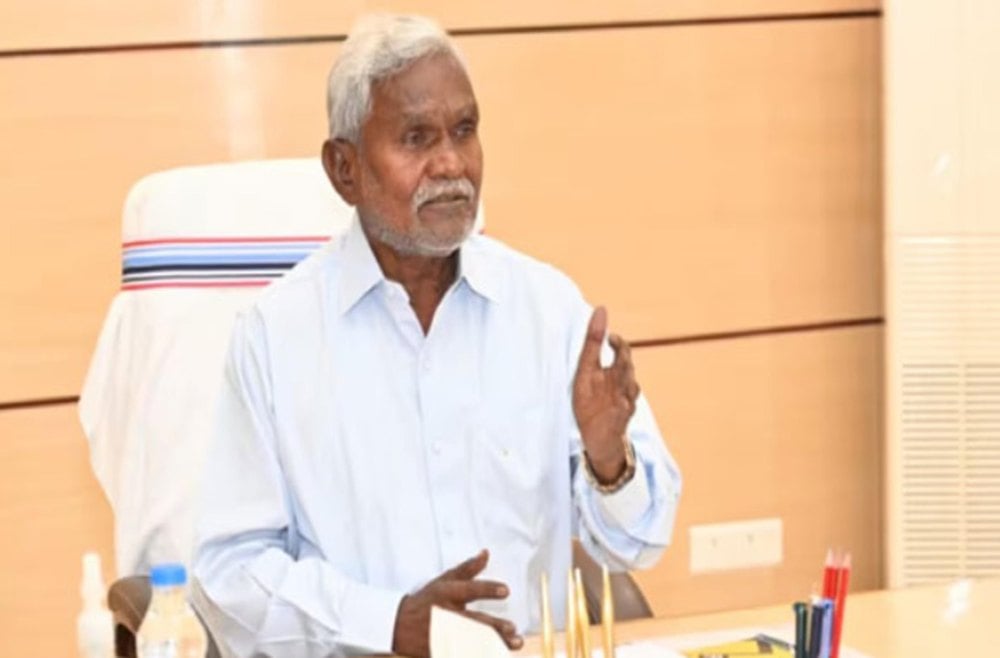
Ranchi: Former Jharkhand Chief Minister Champai Soren has strongly defended his recent remarks on religious conversion and the growing number of churches in tribal regions, arguing that the issue is not political but concerns the preservation of tribal identity, culture and traditions.
Responding to criticism over his earlier statement questioning the presence of thousands of churches in Jharkhand’s tribal areas, Soren said his comments had triggered a strong reaction from several quarters. He maintained that tribal communities and followers of Sanatan traditions have coexisted peacefully for centuries, respecting each other’s places of worship and participating in one another’s festivals without altering their own faith or way of life.
According to Soren, tribal society has a distinct cultural and spiritual identity rooted in nature worship, with customs and traditions governing every stage of life, from birth and marriage to death. He said these practices have been preserved for generations through traditional institutions and community leaders.
The veteran tribal leader argued that despite centuries of social interaction, followers of Sanatan traditions never attempted to change the faith or lifestyle of tribal communities. In contrast, he alleged that Christian missionary activities over the past nearly two centuries have led to large-scale conversions, weakening traditional tribal beliefs and practices.
Soren claimed that in some areas of Jharkhand, traditional tribal worship sites such as Sarna Sthals and Jahersthans have become inactive because there are few people left to perform the customary rituals. He expressed concern that continued conversion could gradually erode tribal languages, customs, festivals and social structures.
Calling the issue one of cultural survival, Soren invoked the legacy of tribal icons such as Birsa Munda, Sidho Murmu and Kanhu Murmu, saying future generations have a responsibility to preserve the traditions they fought to protect.
On the issue of reservation benefits, he argued that those who identify as members of minority communities after religious conversion should not simultaneously claim benefits reserved for Scheduled Tribes. He called for a broader debate on the matter and urged policymakers to address what he described as inconsistencies in the current system.
Soren also questioned the legal basis on which land has been allotted for churches in tribal areas and suggested that such cases should be examined to ensure compliance with existing land protection laws.
Referring to constitutional provisions related to Scheduled Tribes, he urged the Central Government to explore measures, including possible changes linked to Article 342 and the ongoing demand for delisting, to safeguard tribal identity and rights.
He concluded by warning that laws alone would not be sufficient to preserve tribal culture if the pace of religious conversion continues unchecked, stressing that protecting traditional customs and community institutions is essential for the long-term survival of tribal society.
Note: The views expressed above are those of Champai Soren. Issues related to religious conversion, tribal identity, reservation and delisting remain subjects of ongoing social, political and constitutional debate, with differing perspectives from various stakeholders.