

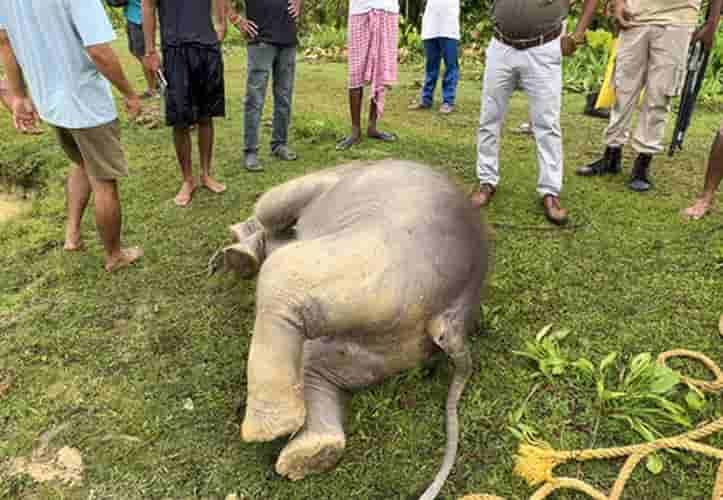
Ranchi: Another elephant has been found dead in Jharkhand, raising fresh concerns over the growing number of elephant fatalities in the state. The carcass was discovered in a field near Tankura village in West Singhbhum district on Wednesday, taking the number of reported deaths in forest areas to four over the past two months.
Villagers spotted the elephant near Burma Toli in Tankura under the Barajamda OP area. According to local residents, a herd of around 20 elephants had entered the village on Tuesday evening. They said they alerted the Forest Department and sought help, but no team reached the spot. The villagers were left to spend the night trying to drive the herd away from the settlement.
The following morning, they found one of the elephants dead in a nearby field. While the exact cause of death remains unknown, residents suspect electrocution. The cause will be established only after the post-mortem examination.
The incident has prompted villagers to question the response of the Forest Department and demand an impartial investigation.
The latest death follows a series of similar incidents reported in different parts of Jharkhand. On October 28, an elephant was found dead in the Bishunpur forest under Balumath police station limits in Latehar district. Forest officials reached the site after receiving information and conducted an enquiry the next day under the leadership of Ranger Nand Kumar Mahato. They suspected that the animal might have died following a fight with another elephant.
Earlier in October, a female elephant was found dead in Bhangaon village in the Jagannathpur area of West Singhbhum. The absence of both tusks raised suspicions of poaching linked to the illegal ivory trade. Forest officials subsequently launched an investigation. Reports suggest that seven elephant deaths have been recorded in the region over the past year.
Another fatal incident occurred on September 7 in Komar village, also under Balumath police station limits in Latehar. An elephant from a herd of around 15 animals died after coming into contact with an electrified fence installed near agricultural fields to protect crops and property.
The recurring incidents highlight the risks posed by the growing overlap between elephant movement routes and human settlements in Jharkhand. As herds enter villages and farmland in search of food, some residents resort to hazardous methods to protect their crops and homes. These include installing electric fencing beyond prescribed voltage limits or connecting fences directly to the AC mains, creating a serious threat to wildlife and people alike.
–IANS