

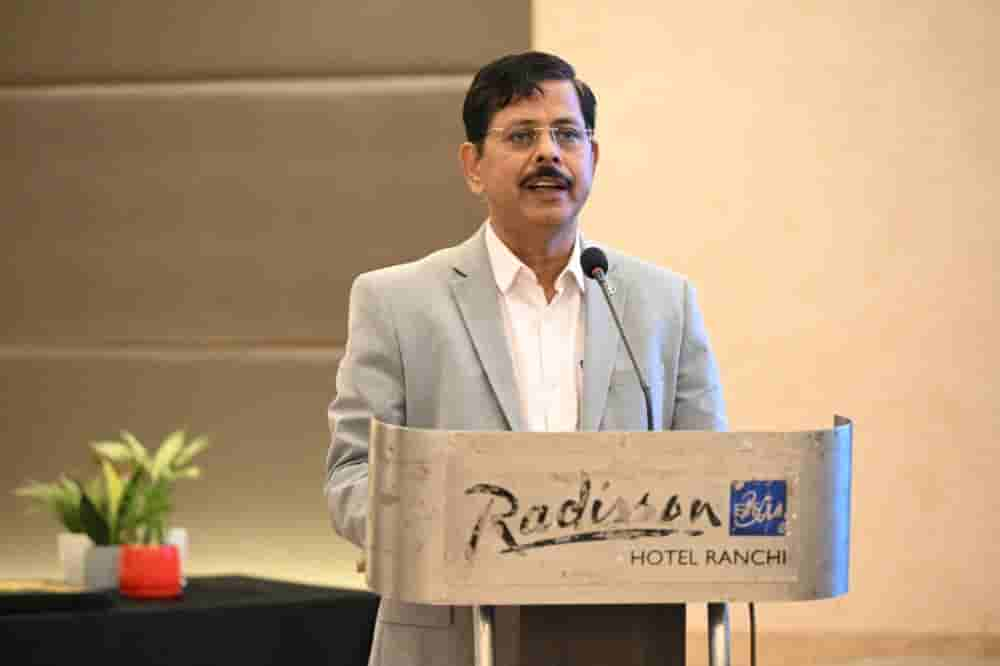
Ranchi: A three-day state-level Training of Trainers (ToT) workshop on Maternal, Perinatal and Child Death Surveillance and Response (MPCDSR) began on Tuesday at Hotel Radisson Blu in Ranchi. Organised jointly by the Jharkhand Health Department and UNICEF, the workshop aims to improve the accuracy of maternal and child death reporting and strengthen the state’s response to preventable deaths.
The workshop was inaugurated by Shashi Prakash Jha, Mission Director of the National Health Mission (NHM), Jharkhand, who formally opened the programme by lighting the ceremonial lamp.
Among those present were Dr Kanika Mitra from UNICEF, Dr Ashwini, State Reproductive and Child Health Officer (SRCHO), State Immunisation Officer Dr Vijay Kishore Rajak, State Nodal Officer for Information, Education and Communication (IEC) Dr Rahul Kishore Singh, IDSP Nodal Officer Dr Pradeep Kumar Singh, Dr Vishal Kataria, Dr Vanesh Mathur and Dr Rajesh Mehta, along with other officials.
Addressing the participants, Jha said reducing maternal and child mortality remained the state’s highest healthcare priority and required strict administrative oversight as well as sincere efforts at the grassroots level.
He stressed that accurate registration and reporting were essential to establish the actual scale of stillbirths and infant deaths. He warned that negligence in Sample Registration System (SRS) reporting and database maintenance would not be tolerated.
Jha said the benefits of government health programmes could be realised only when data was entered accurately and on time. He also emphasised the need to establish accountability in cases of child deaths, urging officials not to shy away from taking responsibility. Health workers at the grassroots level, he said, must perform their duties with dedication and transparency so that the causes of child deaths could be identified and addressed, leading to better health indicators.
The NHM Mission Director instructed health officials to ensure that ASHAs (Sahiyas) and Auxiliary Nurse Midwives (ANMs) promptly inform the authorities whenever a pregnant woman experiences labour pain or a medical emergency. This would help arrange alternative ambulance services when required. He also directed officials to identify women suffering from severe anaemia and ensure their prompt referral to higher healthcare facilities for treatment.
Highlighting the importance of community participation in maternal health and nutrition, Jha called for greater awareness about the harmful consequences of social practices such as child marriage. He also stressed the need to encourage families to provide emotional support to women during pregnancy.
He directed health officials to conduct public awareness campaigns to encourage pregnant women to undergo antenatal check-ups on time and opt for institutional deliveries.
Over the three days, participants will discuss accurate reporting of maternal and child deaths, improvement in data quality, identification of underlying causes and case studies of critical incidents. At the end of the training, the trainers were asked to take the knowledge gained during the workshop to their respective districts and blocks and share it with frontline healthcare workers.
The workshop will conclude on Thursday.