
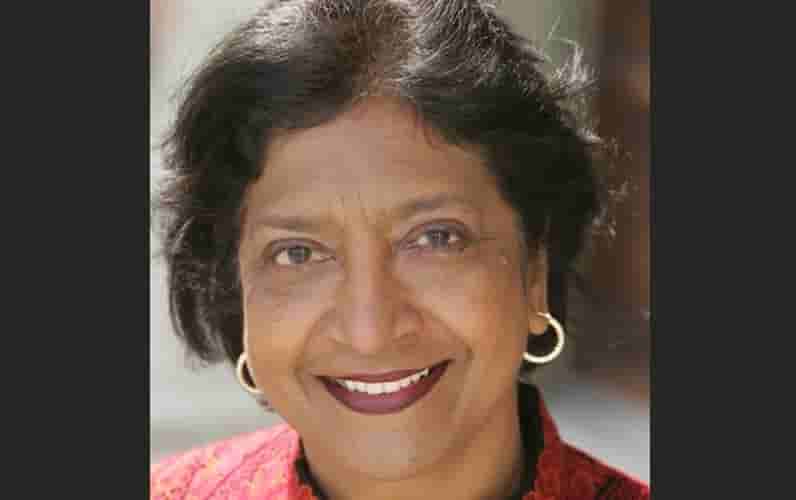
New Delhi- Indian-origin South African jurist Navanethem “Navi” Pillay, a former judge of the International Criminal Court (ICC) and former United Nations High Commissioner for Human Rights, was on Friday awarded the 2026 Nobel Peace Prize for her efforts to promote peace and international law.
The Norwegian Nobel Committee recognised Pillay, 85, for her contribution to strengthening the international legal order and ensuring that war crimes, crimes against humanity and genocide are prosecuted.
Born into a family of Indian Tamil descent in Durban, South Africa, during the apartheid era, Pillay became a pioneering legal figure in her country. She was the first non-white woman to serve as a judge of South Africa’s High Court.
The Nobel Committee highlighted her judicial rigour, personal integrity and courage, noting that her career had helped strengthen international legal institutions at a time when the rules-based international order faces growing pressure.
Pillay began her legal career defending anti-apartheid activists and established her own law firm in 1967. In one of her early landmark cases, she helped secure access to lawyers and other basic rights for political prisoners on Robben Island, including Nelson Mandela.
Following the end of apartheid, she was appointed to South Africa’s High Court in 1995. In 1999, she became a judge and president of the International Criminal Tribunal for Rwanda (ICTR), where she played a significant role in landmark proceedings arising from the 1994 genocide.
During the trial of Hutu leader Jean-Paul Akayesu, the tribunal established important legal precedents recognising that rape and sexual violence could constitute crimes against humanity and acts of genocide under certain circumstances. The case also helped establish the criminal liability associated with direct and public incitement to genocide.
Pillay subsequently served as a judge at the International Criminal Court from 2003 to 2008. She stepped down before the end of her term to take up the position of United Nations High Commissioner for Human Rights, serving from 2008 to 2014.
Her work later extended to international proceedings involving allegations of genocide in Myanmar and the conflict in the occupied Palestinian territory.
In 2019, Pillay was appointed an ad hoc judge at the International Court of Justice (ICJ) in the case brought by The Gambia against Myanmar, alleging violations of the Genocide Convention against the Rohingya. The case remains an important part of international efforts to establish accountability for alleged genocide.
In 2021, she became chair of the UN Independent International Commission of Inquiry on the Occupied Palestinian Territory, including East Jerusalem, and Israel. The commission examined violations linked to the Israeli-Palestinian conflict and reported on alleged war crimes committed by Hamas and Israeli forces following the October 2023 attacks.
In September 2025, the commission concluded that Israel had committed genocide in Gaza. Israel rejected the allegations. The commission’s findings formed part of the continuing international debate over accountability for conduct during the conflict.
The Nobel Committee said Pillay’s work demonstrated how international courts and legal mechanisms could help address conflicts without resorting to force. It stressed that accountability for war crimes and justice for victims were essential foundations for lasting peace.
Earlier in 2026, Pillay was also awarded the Olof Palme Prize alongside fellow South African legal scholar John Dugard.
The Nobel Peace Prize recognises her decades-long work spanning anti-apartheid legal activism, international criminal justice and the promotion of human rights and the rule of law.
–IANS