

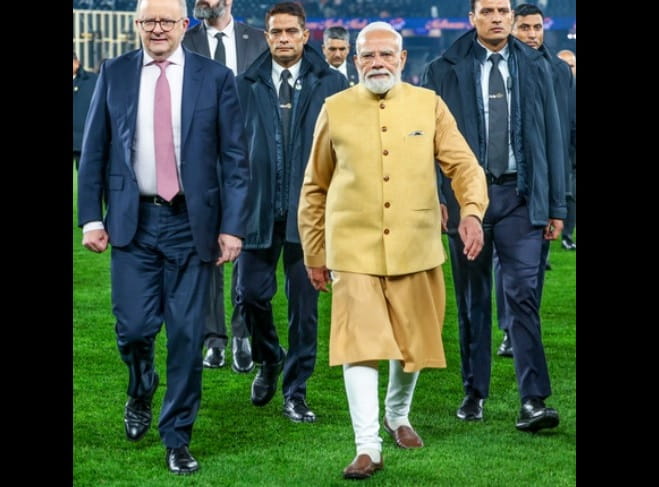
New Delhi: Prime Minister Narendra Modi’s recent visits to Indonesia, Australia and New Zealand have marked a significant milestone in India’s foreign policy, strengthening long-term strategic partnerships in defence, energy, trade and regional security. Among the most notable outcomes was Australia’s decision to operationalise uranium supplies to India, ending years of restrictions on nuclear fuel cooperation.
Australia Opens Door to Uranium Exports
One of the biggest achievements of the tour came in Australia, where both countries moved forward with the implementation of their civil nuclear cooperation. Australia, which had long refused to supply uranium to India despite possessing some of the world’s largest uranium reserves, has now agreed to provide fuel for Indian nuclear reactors.
The development follows the Civil Nuclear Cooperation Agreement signed in 2014 and is expected to support India’s goal of expanding its nuclear power generation capacity to 100 GW.
Defence Cooperation Expands with Indonesia
In Indonesia, India took another step towards becoming a major defence exporter. The two countries signed agreements for the supply of BrahMos supersonic cruise missiles and Astra air-to-air missile systems, strengthening defence cooperation in the Indo-Pacific region.
The agreements make Indonesia one of the countries to procure India’s indigenously developed missile systems, reflecting growing international confidence in India’s defence manufacturing capabilities.
Strategic Maritime and Critical Minerals Partnership
India and Indonesia also agreed to cooperate on the development of Sabang Port near the strategically important Malacca Strait. The project is expected to complement India’s upcoming transshipment hub at Great Nicobar, enhancing maritime connectivity and regional trade.
The two nations also expanded cooperation in the critical minerals sector, including nickel, an essential component for electric vehicle batteries and clean energy technologies.
During the visit, Indonesian President Prabowo Subianto conferred the country’s highest civilian and military honour, the Bintang Adipurna, on Prime Minister Modi. India also announced support for the restoration of the historic Prambanan Temple, reflecting the deep cultural ties between the two countries.
Trade and Investment Receive Fresh Momentum
Economic cooperation also received a major boost during the tour. India and Australia reaffirmed their commitment to conclude the Comprehensive Economic Cooperation Agreement (CECA) at the earliest.
Bilateral trade between the two countries has grown significantly since the implementation of the Economic Cooperation and Trade Agreement in 2022. AustralianSuper also announced an investment of 500 million Australian dollars in India, while discussions focused on attracting greater Australian pension fund investments into Indian infrastructure projects.
New Zealand Ties Enter a New Phase
Prime Minister Modi’s visit to New Zealand, the first by an Indian Prime Minister in nearly four decades, resulted in the launch of a new Strategic Partnership and the Roadmap to 2030.
The two countries agreed to strengthen cooperation in maritime security, counter-terrorism, cyber security and defence logistics. Both sides also set a target of achieving bilateral trade worth seven billion New Zealand dollars and concluded a Free Trade Agreement aimed at expanding economic ties.
The defence logistics arrangement will allow greater cooperation between the Indian Navy and the New Zealand Defence Force, further enhancing India’s presence in the Indo-Pacific region.
A Broader Diplomatic Shift
Taken together, the outcomes of the three-nation tour reflect India’s growing influence on the global stage. From expanding access to nuclear fuel and boosting defence exports to strengthening maritime partnerships, trade and investment, the visit highlighted India’s evolving role as a trusted strategic partner across the Indo-Pacific.
The agreements reached during the tour are expected to deepen India’s engagement with key regional partners while supporting its long-term objectives in energy security, economic growth and strategic connectivity.
With inputs from IANS