
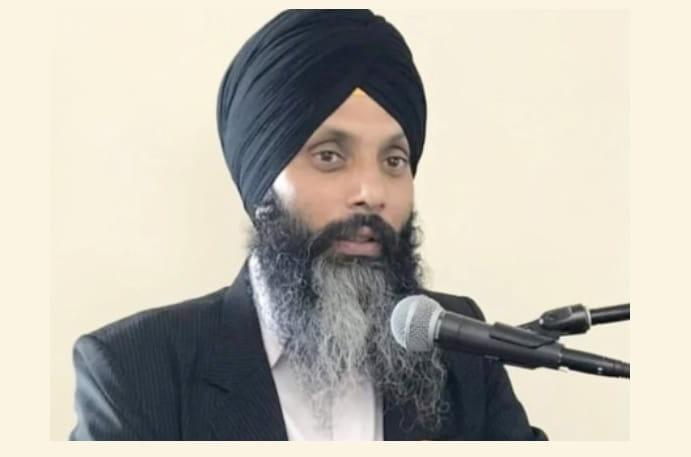
New Delhi: The United States’ indictment of jailed gangster Lawrence Bishnoi and his close associate in the 2023 killing of Khalistan separatist Hardeep Singh Nijjar in Canada has reinforced India’s long-standing position that the murder was carried out by a transnational criminal network rather than the Indian government.
Bishnoi, 33, is the alleged head of the notorious Bishnoi gang, which has been linked to several high-profile crimes in India and abroad.
Nijjar, a Canadian citizen and prominent Khalistan campaigner, had been designated a terrorist by India over alleged involvement in violent separatist activities. He was shot dead outside a Sikh temple in Surrey, near Vancouver, on June 18, 2023, triggering a major diplomatic dispute between India and Canada.
Following the killing, then Canadian Prime Minister Justin Trudeau said authorities were pursuing “credible allegations” linking Indian government agents to the assassination. India firmly rejected the accusation as “absurd”, but the controversy led to a sharp deterioration in bilateral ties, including the expulsion of diplomats and suspension of several engagements.
The US has now unsealed an indictment accusing Bishnoi and his associate Satinderjeet Singh, alias Goldy Brar, of planning and executing Nijjar’s murder. According to the charges, Bishnoi directed the conspiracy from prison in India, while Brar coordinated operations in North America. Notably, the indictment does not accuse the Indian government of any involvement.
According to Canada’s CBC News, Royal Canadian Mounted Police (RCMP) Deputy Commissioner Lisa Moreland said investigators had found no evidence linking Indian officials to the offences outlined in the US indictment. She also said the Indian government had cooperated with the investigation.
American media outlets also noted that the charges centre on organised crime rather than state involvement. CNN reported that neither First Assistant US Attorney Bill Essayli nor any other US official alleged that the Indian government had any role in or prior knowledge of Nijjar’s killing during a press conference in Los Angeles.
The latest developments contrast with the initial narrative that emerged after Canada’s public allegations against India, which New Delhi consistently denied.
With the US case focusing on organised crime, the killing is now being presented as the work of a transnational criminal syndicate rather than a state-sponsored operation.
Canada’s The Globe and Mail described the killing and the diplomatic fallout as the catalyst for a geopolitical crisis, while noting that the US indictment is silent on allegations of Indian government involvement.
Signs of improving India-Canada relations had already begun to emerge. In October last year, the Toronto Sun reported that ties between the two countries were beginning to thaw after years of strained relations.
The newspaper highlighted Canadian Prime Minister Mark Carney’s invitation to Prime Minister Narendra Modi for talks and noted that the move reflected Ottawa’s efforts to restore normal diplomatic engagement.
Quoting former Canadian diplomat and Macdonald-Laurier Institute senior fellow Alan Kessel, the report said Carney’s invitation to Modi for the G7 Summit in Alberta marked a clear shift in Canada’s approach.
“It was a clear signal that Canada was back to engaging and not isolating,” Kessel said.
After taking office in May 2025, Carney moved to reset relations with India. During his meeting with Prime Minister Modi at the G7 Summit in Alberta, both leaders agreed to revive bilateral engagement.
Since then, India and Canada have restored High Commissioners, resumed visa services, restarted ministerial dialogue on trade, energy, environment and security, and renewed intelligence and security cooperation on issues of mutual concern.
With inputs from IANS