
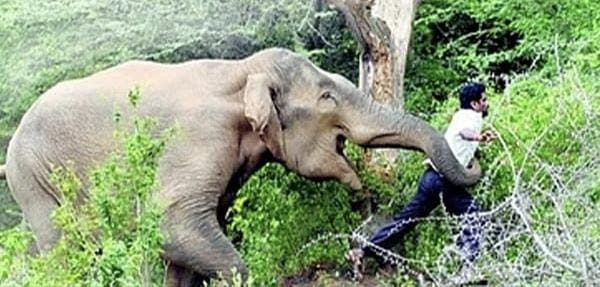
Ranchi: The growing conflict between humans and wild elephants has emerged as one of Jharkhand’s biggest wildlife and public safety challenges. Fresh concerns have surfaced after a herd of elephants entered Golgo village in Koderma district’s Domchanch block, damaging at least six houses. Although no one was injured in the incident, it has left villagers terrified.
The latest incident underscores a larger crisis unfolding across the state. According to government data, elephant attacks have claimed more than 474 human lives in Jharkhand between 2020 and 2025, while over 150 people have been injured. Several victims have also been left permanently disabled.
Conflict Hotspots Across the State
Human-elephant conflict is most severe in Ranchi, Khunti, West Singhbhum (Chaibasa), East Singhbhum (Jamshedpur), Seraikela-Kharsawan, Gumla, Latehar, Bokaro, Dhanbad and, more recently, Koderma. The Ranchi division has recorded the highest number of such incidents.
Elephants Are Victims Too
The rising conflict is proving deadly for elephants as well. Many have lost their lives after coming into contact with high-voltage power lines, illegal electric traps set by villagers, train accidents and improvised explosive devices (IEDs) planted in forest areas. Wildlife conservationists warn that Jharkhand is increasingly becoming an unsafe habitat for elephants.
Government Compensation and Relief
The Jharkhand government provides compensation through the Forest Department for deaths, injuries and property damage caused by elephant attacks.
Currently, the family of a person killed in an elephant attack is entitled to Rs 4 lakh in compensation. The state Cabinet has approved a proposal to increase the amount to Rs 10 lakh.
Chief Minister Hemant Soren has directed officials to ensure that compensation reaches affected families within 10 days of an incident. The government is also planning to introduce mobile veterinary units to provide timely treatment to injured elephants.
Heavy Losses to Farmers
Apart from the loss of human lives, elephant raids have caused widespread destruction in rural areas. Herds frequently damage paddy, sugarcane and mahua crops while searching for food. They also enter homes in search of stored grain, often breaking doors, walls and household structures. Thousands of homes across the state have reportedly been damaged by elephants over the past five years.
What’s Driving the Conflict?
Wildlife experts say the increasing encounters are largely the result of shrinking forest habitats. Illegal mining, large-scale deforestation and the disruption of traditional elephant corridors have forced herds to abandon their natural migration routes. With diminishing food and water sources inside forests, elephants are increasingly entering villages and agricultural fields, leading to frequent confrontations with people.
Experts believe the situation will continue to deteriorate unless urgent steps are taken to protect forests, restore elephant corridors and strengthen conflict-management measures in vulnerable regions. They stress that a long-term conservation strategy is essential to safeguard both human communities and elephant populations in Jharkhand.