
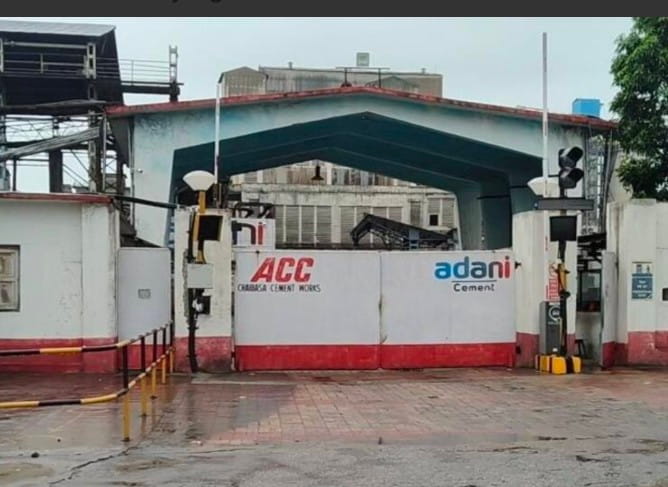
Jamshedpur: Bringing an end to nearly eight decades of industrial history, ACC Limited has announced the permanent closure of its iconic cement plant at Jhinkpani in West Singhbhum. The company has confirmed that operations at the facility will officially cease on August 16, marking the end of one of Jharkhand’s oldest cement manufacturing units.
The closure is expected to have a significant social and economic impact on the region. Around 1,600 workers, including permanent employees and a large number of contract labourers, are likely to be directly affected. Thousands of families whose livelihoods depend on the plant and its supporting businesses now face an uncertain future.
Established in 1946, the Jhinkpani cement plant has been a cornerstone of the region’s industrial development since before India’s Independence. For generations, it has provided employment and contributed to the economic growth of Jhinkpani and nearby areas.
In its official statement, ACC said the decision followed a comprehensive assessment of the plant’s long-term viability. The company cited the depletion of nearby limestone reserves, rising transportation and manufacturing costs, and ageing infrastructure as the key reasons behind the shutdown.
With local raw materials exhausted, the company said sourcing clinker and other essential inputs from distant locations had become increasingly expensive, making continued operations commercially unviable. It also noted that the plant’s decades-old machinery could no longer meet modern standards of efficiency, productivity and environmental compliance.
Company officials described the decision as a difficult but unavoidable one, adding that all possible alternatives had been explored before concluding that the plant could no longer be operated sustainably.
ACC has assured that permanent employees will receive salary in lieu of the statutory notice period, retrenchment compensation and all other benefits as per applicable labour laws.
However, uncertainty remains for the large contractual workforce, many of whom rely entirely on the plant for their livelihood.
“Three generations of my family have worked at this factory. We never imagined the day would come when its gates would close forever,” said an employee, struggling to hold back emotions.
“The plant supported not just workers but entire villages. If it closes, hundreds of families may have no option but to migrate in search of work,” said a contract labourer.
Local residents and labour representatives fear the shutdown could trigger economic hardship across the region, affecting small businesses, transport operators and surrounding villages that have depended on the factory for decades.
As the chimneys of the historic Chaibasa Cement Works prepare to fall silent, Jhinkpani is set to lose not just an industrial unit but a landmark that shaped the region’s identity and sustained generations of families for nearly 80 years.