
New Delhi: The Central Government has released ₹44,323 crore to States and Union Territories so far in the current financial year 2025–26 under the Mahatma Gandhi National Rural Employment Guarantee Scheme (MGNREGS), covering wages, material, and administrative expenses, the Lok Sabha was informed on Tuesday.
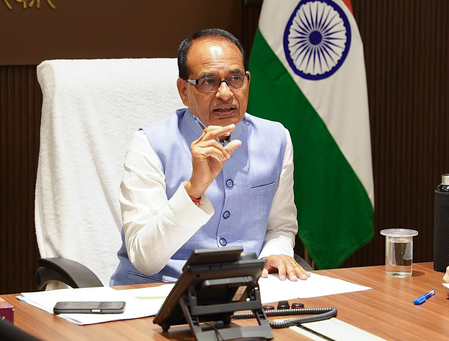
Providing the update as of July 17, Union Rural Development Minister Shivraj Singh Chouhan said that the government has allocated ₹86,000 crore for MGNREGS in FY26, maintaining the same allocation as the previous year to ensure sustained rural employment support.
In response to a question by MP T. M. Selvaganapathy on whether the government was considering scrapping the scheme, the Minister clarified, “There is no such proposal. On the contrary, continuous efforts are being made to strengthen the scheme’s implementation at the grassroots level.”
Minister Chouhan reiterated the core objectives of MGNREGS: to guarantee employment while creating durable and productive assets, enhance the livelihood base of the poor, promote social inclusion, and strengthen Panchayati Raj institutions.
Addressing concerns about budget cuts, the Minister stated that the ₹86,000 crore allocated in FY25 was the highest ever since the scheme’s inception. He also noted that, since MGNREGS is a demand-driven scheme, the Ministry of Rural Development actively monitors employment demand at the local level and seeks additional funding from the Ministry of Finance when necessary.
Responding to concerns raised by some state governments over delays in fund disbursement, Chouhan explained that wage payments are made directly by the Central Government to workers’ accounts through the Direct Benefit Transfer (DBT) system.
As for material and administrative costs, the Minister said that States and UTs must submit fund release proposals to the Centre. “The Central Government disburses funds in two tranches, each comprising one or more installments. The release is based on the approved Labour Budget, demand for work, existing balances, fund utilization pace, pending liabilities, and performance, subject to the submission of required documents by the States/UTs,” he added.
With inputs from IANS