
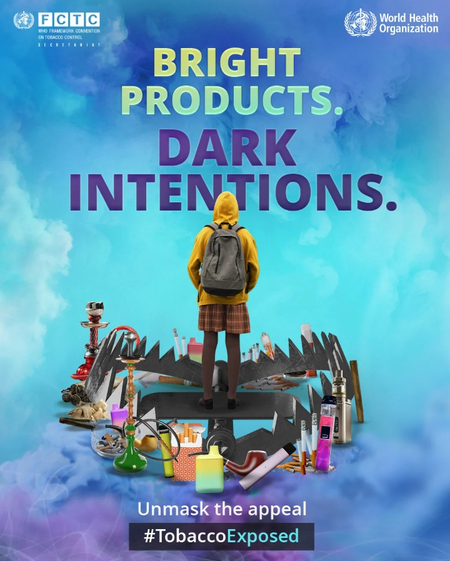
New Delhi – The World Health Organization (WHO) has called for urgent action to ban flavoured tobacco and nicotine products, warning that these items are being falsely marketed as safer alternatives and are deliberately targeting children and adolescents.
The appeal comes ahead of World No Tobacco Day, observed annually on May 31. This year’s theme, “Bright Products. Dark Intentions. Unmasking the Appeal,” highlights the hidden dangers of flavoured tobacco products, which are made attractive through sweet flavors, colorful packaging, influencer promotion on social media, and deceptive health claims.
The WHO is urging governments worldwide to ban all flavourings in tobacco and nicotine products — including cigarettes, pouches, hookahs, and e-cigarettes — to protect young people from addiction and health risks.
These flavourings, such as menthol, bubble gum, and cotton candy, mask the harshness of tobacco and nicotine, making these harmful products more appealing to the youth. Research shows they not only make quitting more difficult but are also linked to serious lung diseases.
“Flavours are fueling a new wave of addiction and must be banned. They threaten to undo decades of progress in tobacco control,” said Dr. Tedros Adhanom Ghebreyesus, WHO Director-General.
Currently, more than 50 countries ban flavoured tobacco, and over 40 nations prohibit e-cigarette sales. While five countries have banned disposable e-cigarettes, and seven have banned flavoured variants, flavoured accessories still often slip through regulations.
Saima Wazed, WHO Regional Director for South-East Asia, noted that an estimated 11 million adolescents aged 13 to 15 in the region are already addicted to tobacco — accounting for nearly 30% of the global total in that age group.
“We’re seeing aggressive marketing of new and emerging nicotine and tobacco products (NENTPs) — including e-cigarettes, heated tobacco devices, and flavoured pouches — disguised as safer options and directly aimed at children and teens,” said Wazed.
Tobacco use remains the leading preventable cause of death globally, contributing significantly to noncommunicable diseases (NCDs) such as heart disease, cancer, diabetes, and chronic respiratory illness.
“Without strong action, the global tobacco epidemic — already claiming around 8 million lives annually — will continue to thrive on addiction, masked by appealing flavours,” added Dr. Ghebreyesus.
With inputs from IANS