
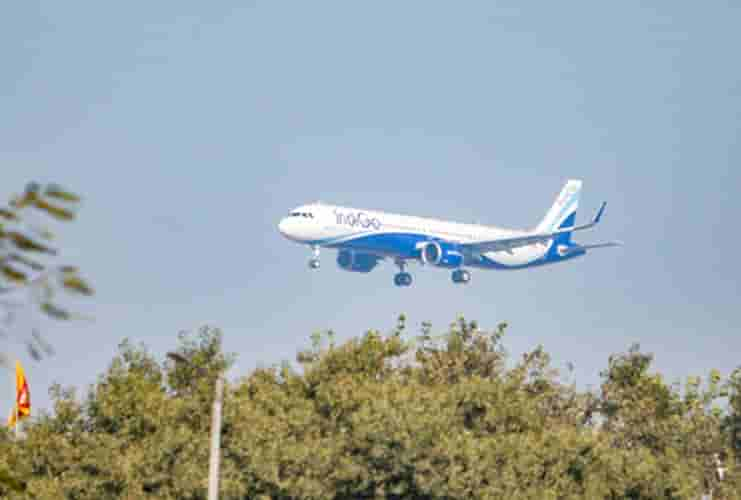
Mumbai: InterGlobe Aviation Ltd, the parent company of India’s largest airline IndiGo, reported a consolidated net loss of ₹1,879 crore for the quarter ended September 2026 (Q2 FY27), narrowing from ₹2,582 crore in the corresponding quarter last year.
According to the company’s stock exchange filing on Thursday, revenue from operations increased 25.9% year-on-year to ₹23,364 crore, compared with ₹18,555 crore in Q2 FY26. The growth was supported by resilient travel demand and yield management initiatives.
The airline also recorded a significant improvement in operating earnings. Earnings before interest, taxes, depreciation and amortisation (EBITDA) surged 229% to ₹1,908 crore from ₹579 crore a year earlier. Consequently, the EBITDA margin expanded to 8.2%, up from 3.1% in the year-ago quarter.
However, earnings before interest, tax, depreciation, amortisation and rent (EBITDAR), a key measure of airline operating profitability, declined 3% to ₹3,667 crore from ₹3,792 crore. The EBITDAR margin contracted to 15.7% from 20.4% in the corresponding period last year.
High fuel costs and geopolitical disruptions weigh on performance
IndiGo CEO Willie Walsh said the September quarter was seasonally weak and had been further affected by exceptionally high fuel prices and continuing geopolitical disruptions.
“We remain focused on managing the near-term challenges while continuing to invest for the future. India’s long-term aviation opportunity remains compelling, and our priorities remain clear: safe and reliable operations, rigorous cost discipline, and disciplined growth that creates sustainable value,” Walsh said.
The airline also adjusted its capacity during the quarter. Its available seat kilometres (ASKs), a measure of passenger-carrying capacity, declined by around 1% year-on-year.
Despite the narrower net loss and stronger EBITDA, the decline in EBITDAR and its margin indicates that profitability remained under pressure. IndiGo said it would continue to focus on cost discipline, operational reliability and measured growth amid near-term industry challenges.
-IANS