
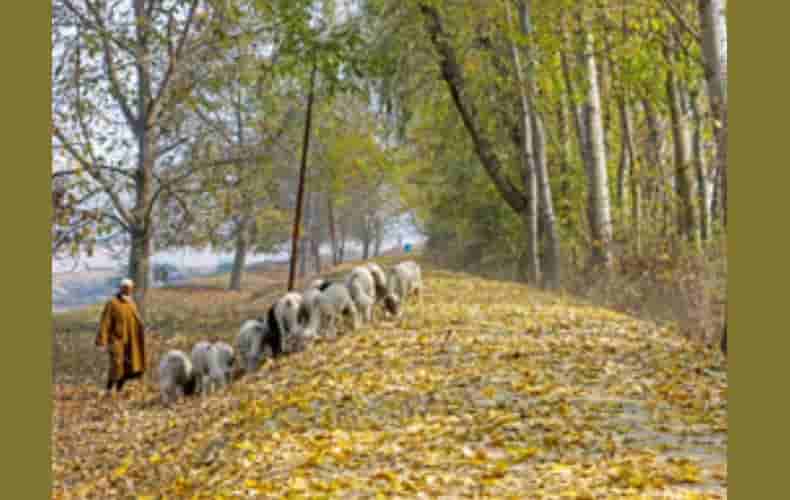
Srinagar- Turtle doves feeding on fallen grain in harvested paddy fields, cicadas chirping from willow trees and migratory birds calling across the night sky are among the signs that autumn has arrived in Kashmir.
The Valley is entering its distinctive golden-yellow season as farmers complete the paddy harvest and orchardists begin picking apples. Markets are also filling up with grapes, nadru (lotus stems), sweet chestnuts and a variety of locally grown vegetables.
The skies have turned clearer as the risk of cloudbursts, thunderstorms and hailstorms associated with the changing weather begins to recede. While afternoons remain warm, mornings and evenings have started becoming noticeably cooler.
Srinagar, however, experienced an unusual spell of autumn heat. The city recorded a maximum temperature of 31.2 degrees Celsius on Sunday, its second-highest October temperature on record. The reading surpassed the previous October high of 31.1 degrees Celsius recorded on October 2, 2008.
The warmer afternoons contrast with cooler mornings and evenings, prompting residents to begin wearing light woollens as the season changes.
Turtle doves have descended from the higher reaches of the Valley and are feeding on grains left behind in harvested paddy fields. Their increased feeding activity is part of their preparations for the journey towards the warmer plains as winter approaches.
Cicadas can also be heard chirping from willow trees, where their natural camouflage makes them difficult to spot among the foliage.
At night, the calls of migratory birds signal the arrival of another seasonal visitor to the Valley. Thousands of birds, including bar-headed geese, mallards, pochards, shovelers, pintails, wigeons, sheldrake ducks and teals, spend the winter in Kashmir’s wetlands and water bodies.
The birds arrive from regions including Siberia, China, Japan, the Philippines and Eastern Europe, seeking relatively milder conditions during the winter months.
Autumn also marks the annual migration of the Bakarwal pastoral communities from the high-altitude meadows of Kashmir towards the warmer areas of the Jammu region. Families travel with their sheep, goats, dogs and horses, carrying household belongings as they begin the journey to their homes in Poonch, Rajouri, Kathua and Reasi districts.
For the Bakarwals, the seasonal migration is a longstanding way of life. During summer, families move with their livestock to highland pastures, before returning to lower elevations ahead of the harsh winter.
Women and children travel alongside the herds, while horses carry utensils, clothes, bedding and other household necessities needed during the long journey.
The seasonal movement is also visible among migrant workers from Bihar, West Bengal, Uttar Pradesh and other states who work in construction, orchards and paddy fields. Many have started returning home as temperatures begin to fall and the Valley prepares for winter.
With daylight hours becoming shorter, markets, streets and workplaces are beginning to wind down soon after sunset.
Local vegetable markets are stocked with turnips, spinach, tomatoes, brinjals and potatoes. However, an unusual price trend has been noticed, with some locally grown vegetables selling at higher prices than produce brought in from outside the Valley.
The transformation of the Chinar trees is another unmistakable sign of the season. Their leaves are beginning to change from deep green to yellow, before developing shades of amber, gold, orange and deep red as autumn progresses and the leaves eventually fall ahead of winter.
Meanwhile, the water in Kashmir’s rivers, streams and springs remains clear, while some distant mountain peaks are beginning to acquire a white covering following early snowfall at higher elevations.
For residents and visitors, autumn offers a distinct view of Kashmir, combining the colours of the changing Chinar foliage with the harvest season, cooler evenings and the arrival of migratory birds before the Valley settles into winter.
–IANS