
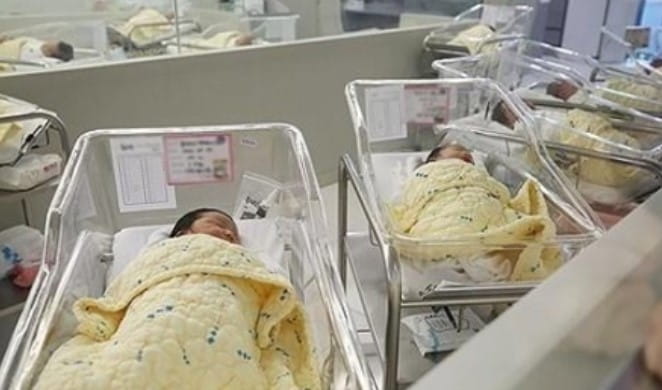
Beed (Maharashtra)- The birth of a baby girl has brought an unusual wave of celebration to a family in Maharashtra’s Beed district, where relatives say no daughter had been born in the family for nearly two centuries.
The Dahifale family welcomed the newborn, named Gargi, with a grand procession after she and her mother were discharged from the hospital. The infant was brought home in a decorated chariot, accompanied by drums, cymbals and dancing family members.
The family said Gargi is the first girl born into their family in around 200 years, turning what would normally be a private family occasion into a community celebration.
Gargi’s grandfather said the birth had fulfilled a long-standing wish in the family.
“It is a great fortune to have a daughter in the family. For so many years, we had the regret of not having a daughter, and today that has been fulfilled,” he said.
Her grandmother, Surekha Dahifale, affectionately described the newborn as “Lakshmi Devi”, invoking the Hindu goddess traditionally associated with prosperity and good fortune.
She said the family decided while still at the hospital that Gargi would receive a special welcome when she returned home.
The baby’s father also expressed his happiness, saying he looked forward to raising his daughter with love and care.
“Daughters are usually more close to their fathers; we will raise her like a flower,” he said.
He added that while families often express a preference for sons, having a daughter brings a different kind of happiness.
The celebrations in Beed stand out against the backdrop of India’s long-running efforts to address gender discrimination and the social preference for male children. In many parts of the country, the birth of a girl has historically not received the same level of celebration as that of a boy.
There have, however, been several examples of communities turning the birth of girls into occasions for public celebration.
One of the best-known examples comes from Piplantri village in Rajasthan, where villagers have traditionally planted 111 saplings to mark the birth of every girl child.
The practice was initiated by former village sarpanch Shyam Sunder Paliwal following the death of his daughter. It subsequently became associated with efforts to challenge the preference for male children and promote greater social and environmental awareness.
The Dahifale family’s celebration similarly puts the spotlight on the emotional and cultural significance that the arrival of a daughter can have for a family. Gargi’s grand welcome, complete with a chariot procession, reflects a shift in attitude in which the birth of a girl is being celebrated not as a cause for concern, but as an occasion for pride and happiness.
With inputs from IANS