
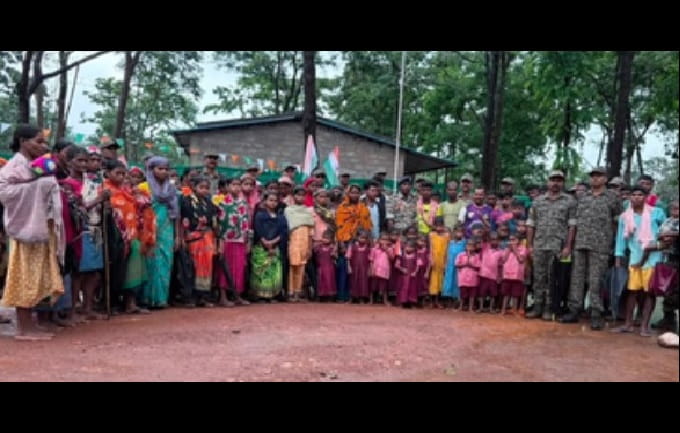
Raipur — A new chapter began in nine remote villages of Abujhmad in Chhattisgarh on the 80th Independence Day, as residents hoisted the national flag for the first time since Independence, marking a significant moment for communities that had lived for years under the shadow of Naxal violence.
The Tricolour was unfurled in Korskodo, Hachekoti, Adnar, Boter, Kumnar, Diwalur, Gundekot, Rekapal and Rasmeta, with villagers participating in the celebrations with enthusiasm and a sense of freedom, police officials said.
For decades, these remote settlements were considered among the most affected areas of Naxal activity in the region. The difficult terrain had made parts of Abujhmad a stronghold for Naxal groups and an operational base for senior leaders. Fear and intimidation often prevented villagers from openly celebrating national festivals or displaying the national flag.
According to officials, the situation changed after the area was declared free of Naxal influence on March 31, 2026. This year’s Independence Day therefore became an important milestone, giving residents an opportunity to celebrate openly and hoist the Tricolour without the fear that had once accompanied such public events.
For the villagers, the ceremony went beyond a routine Independence Day programme. As the national flag rose over the settlements, residents saluted it and joined in the celebrations, expressing their desire to reconnect with the country’s mainstream after years of isolation.
The significance of the occasion was particularly strong in an area where difficult geography, limited infrastructure and prolonged violence had restricted access to government services and development opportunities.
The return of peace could now open the way for greater focus on roads, healthcare, education, communication facilities and other basic services, provided security gains are sustained and development reaches the remote communities.
For many residents, the flag-hoisting ceremony represented a personal affirmation that a period of fear was giving way to greater security, stability and hope. It also symbolised their growing participation in the country’s democratic and civic life.
The Tricolour now flies in villages where Naxal influence once restricted even simple expressions of national identity. The celebrations in Abujhmad thus carried a larger message — that the restoration of peace can create space for development, inclusion and a stronger connection between remote communities and the national mainstream.
With inputs from IANS