
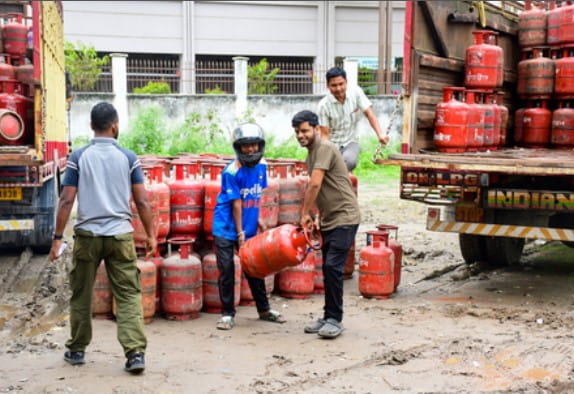
New Delhi: The government on Sunday said that the cost of supplying a standard 14.2-kg domestic LPG cylinder has climbed to more than ₹1,600 due to disruptions caused by the ongoing crisis in West Asia. Despite a recent ₹29 increase in retail cooking gas prices, oil marketing companies are still bearing an under-recovery of nearly ₹700 on every household cylinder sold.
The Petroleum Ministry explained that the impact of rising global energy costs is evident in the price of commercial LPG cylinders. In Delhi, a 19-kg commercial cylinder used by hotels and restaurants now costs ₹3,113.50 after multiple price hikes during the West Asia conflict. While domestic consumers currently pay around ₹66 per kg for LPG, the actual import-linked cost of supplying a household cylinder exceeds ₹1,600.
The situation worsened as tensions affected movement through the Strait of Hormuz, a key global energy route that handles roughly one-fifth of the world’s oil trade and a significant share of India’s energy imports. Around 54 per cent of India’s LPG imports pass through this corridor, making the country’s cooking gas supplies particularly vulnerable to disruptions.
However, the government said India managed to maintain uninterrupted fuel supplies. Indian-flagged tankers continued transporting crude oil and LPG through the Strait and unloading cargo at domestic ports. As a result, there has been no shortage of petroleum products, and LPG bottling and distribution operations have continued normally across the country.
To tackle supply challenges, domestic LPG production was increased by more than 60 per cent, rising from around 32 thousand metric tonnes (TMT) to 52 TMT. India also expanded sourcing from countries outside the Strait of Hormuz route, including the United States, Canada and Algeria. Available LPG supplies were prioritised for households and essential institutions such as hospitals and educational establishments.
On the demand side, consumers were encouraged to switch to piped natural gas (PNG) wherever available to reduce pressure on LPG supplies. Authorities also intensified efforts to prevent diversion of subsidised domestic cylinders into the commercial market. OTP-based delivery verification now covers nearly 90 per cent of deliveries, helping plug leakages.
The financial burden on oil marketing companies has continued to rise. The cumulative under-recovery on domestic LPG reached ₹60,000 crore by the end of the previous financial year, compared to ₹41,338 crore a year earlier. To ease this strain, the Union Cabinet has approved compensation of ₹30,000 crore for the companies.
The ministry also highlighted that beneficiaries under the Pradhan Mantri Ujjwala Yojana continue to receive an additional subsidy of ₹300 per cylinder directly into their bank accounts, benefiting more than 10.58 crore LPG connections across the country.
With inputs from IANS