
Singapore: India has transformed into an assertive global player under Prime Minister Narendra Modi’s leadership, supported by its young, technologically skilled, and expanding middle-class population, according to an opinion article published by Channel News Asia.
The article noted that the International Monetary Fund has identified India as the fastest-growing major economy in recent years, recording a real Gross Domestic Product (GDP) growth rate of 6.4 per cent. With its nominal GDP crossing $4 trillion, India is projected to surpass Japan and Germany by 2030 and could potentially become the world’s largest economy within the next decade.
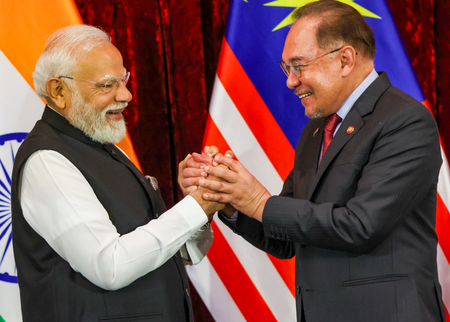
To strengthen its global standing, the report highlighted the government’s strategic push toward the Indo-Pacific through deeper engagement with Southeast Asia. Political analyst James Chai stated that strong personal rapport between leaders has contributed significantly to India’s diplomatic outreach, particularly between Modi and Anwar Ibrahim.
Chai noted that Modi honoured a prior commitment to visit Malaysia in early 2026. The visit featured ceremonial honours, including participation by the Royal Malay Regiment, along with cultural performances and student participation.
The commentary also highlighted the cultural connections between the two leaders, including their shared admiration for the Tamil language and actor M. G. Ramachandran. It further mentioned that Anwar Ibrahim has frequently spoken about his appreciation for Indian culture and literature, including the influence of the epics Mahabharata and Ramayana during his imprisonment.
According to the article, Malaysia hosts nearly three million people of Indian origin, making it one of the largest overseas Indian communities. Strong people-to-people connections through tourism, education, and cultural exchange have helped bilateral trade between the two nations reach approximately $18.6 billion in 2025.
The report also highlighted economic complementarities between the two countries. India remains the largest importer of Malaysian palm oil, while Malaysia’s long-standing expertise in semiconductor backend manufacturing presents opportunities for collaboration with India’s semiconductor development initiatives.
The commentary added that recent memorandums of understanding between the two countries reinforced their comprehensive strategic partnership, covering defence cooperation, education, trade, and cultural exchange.
With inputs from IANS